Pishgam Sayandeh Pars Abrasives Logo
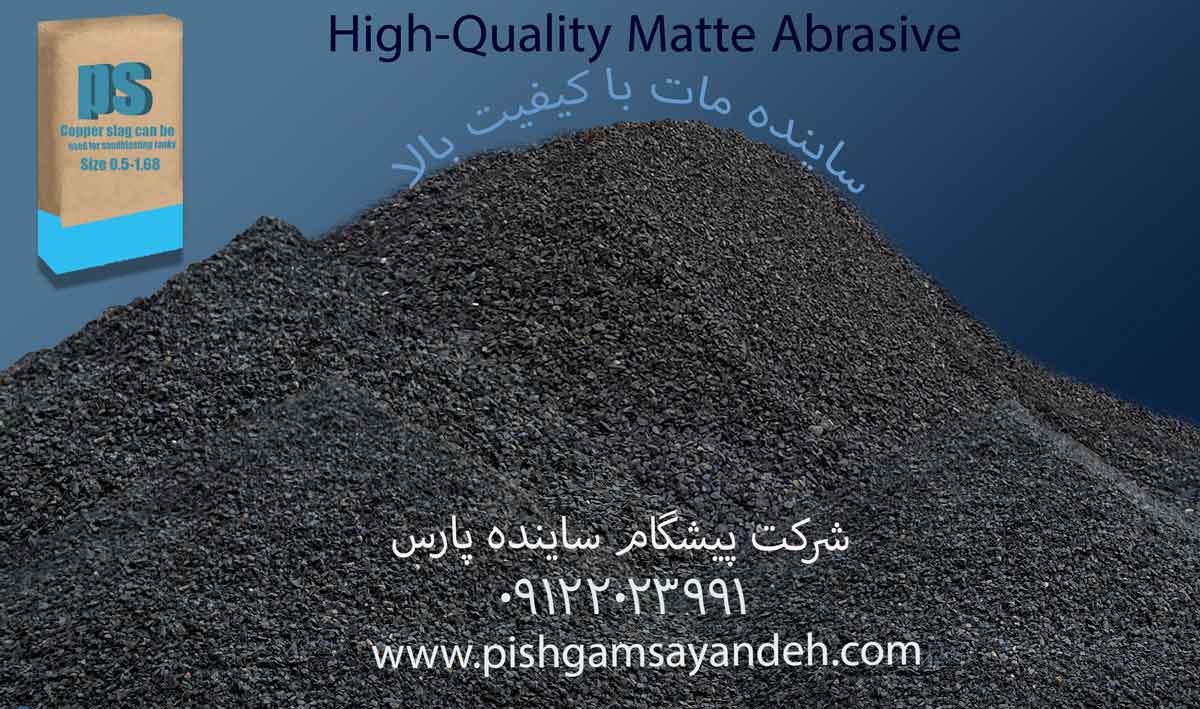
Matte <strong>copper slag</strong>, suitable for industrial sandblasting in compliance with ISO 11126-10

What Is Matte Copper Slag? Properties, Applications, and Benefits

Matte copper slag is an industrial blasting media derived from the copper smelting process. It is produced during the melting and concentrating stages in the reverberatory furnaces of Sarcheshmeh Copper Complex and then uniformly air-cooled. Due to its high density and solid structure, matte copper slag is an excellent choice for metal surface sandblasting. These characteristics make it widely used across various industries for cleaning metal surfaces, surface preparation, and abrasive blasting.

High-quality matte <strong>copper slag</strong> with glassy coating

Matte Slag (Copper Slag) is an industrial abrasive obtained from the copper extraction process. This material is produced during the smelting and refining process in the Reverberatory furnaces at the Sar Cheshmeh copper mine and is then evenly cooled in the open air. Due to its high density and uniform structure, Matte Slag is an excellent option for sandblasting metal surfaces. These characteristics make it widely used in various industries for cleaning metal surfaces, abrasive blasting, and surface processing.

Matte Slag is produced in the Reverberatory furnaces at the Sar Cheshmeh copper mine. In this process, slag is separated from molten copper and then cooled for 16 days in the open air. This gradual cooling process creates a uniform structure and high density, which ultimately results in higher quality and performance in sandblasting metal surfaces.

Matte Slag is composed of several different phases, including metallic and non-metallic compounds. These compounds are carefully controlled during the smelting and cooling process to achieve a uniform structure with high density.

What is "Matte Slag" (Copper Slag)? It is one of the types of slag produced during the copper extraction process, where impurities rise to the surface of the molten copper and are then slowly cooled to create a uniform and durable structure.

High Density: High density gives Matte Slag greater ability to penetrate hard materials. This feature allows the sandblasting process to be carried out faster and at a lower cost.

Uniform Structure: The uniform structure of Matte Slag means its particles are very similar in size and physical properties. This structural integrity makes it more precise and effective in sandblasting and abrasive blasting processes.

After the copper slag is collected by the slag extractor, it is evenly cooled in the open air at ambient temperature. This non-crystalline material has identifiable phases, such as Petedunnite (CaZnSi2O6), Pyroxene, and Iron Aluminum Oxide (FeAl2O4).

One of the notable features of Matte Slag is that due to its gradual cooling in the open air, the forming atoms have the opportunity to position themselves appropriately, forming a structure with greater strength. This increases the density and specific gravity of Matte Slag. Furthermore, Matte Slag has a hardness of at least 6 on the Mohs scale and meets the international standard ISO-11127-4. It falls under category A of the SSPC-AB1 standard.

Constituent Phases of Matte Slag

  • Petedunnite (CaZnSi2O6): This mineral phase helps increase the hardness and strength of Matte Slag, contributing to its physical properties such as high density and stability.
  • Pyroxene: A group of minerals that, due to their resistance properties, especially against heat and abrasion, make Matte Slag suitable for sandblasting hard and more resistant surfaces.
  • Iron Aluminum Oxide (FeAl2O4): Another mineral compound found in the structure of Matte Slag that helps increase its density and hardness.
read more about sandblast

Matte Copper Slag Production Process | Impact of Cooling on Quality

Matte copper slag is produced in the reverberatory furnaces of the Sarcheshmeh Copper Complex. During this process, the slag is separated from molten copper and then left to cool in open air for 16 days. This gradual air-cooling process creates a uniform structure and high density, which significantly enhances the quality and performance of the abrasive in metal surface sandblasting.

What Are the Constituent Phases of Matte Copper Slag?

Matte copper slag is composed of several distinct phases, including both metallic and non-metallic compounds. These compounds are carefully controlled during the melting and cooling processes to create a uniform structure with high density.

Matte Copper Slag refers to a type of slag generated during the copper extraction process. During this stage, impurities rise to the surface of the molten copper, and the material is slowly cooled to form a uniform and durable structure. The gradual cooling process results in a more consistent and uniform structure.

High Density: High density allows matte copper slag to have greater penetrating power when blasting hard surfaces. This property enables sandblasting processes to be performed more efficiently and cost-effectively. Additionally, high density improves performance and enhances the effectiveness of the material.

Uniform Structure: The uniform structure of matte copper slag means that its particles are very similar in size and physical properties. This structural integrity ensures more precise and effective performance in sandblasting and abrasive blasting processes. Moreover, it promotes even pressure distribution during sandblasting.

After the copper slag is collected by the slag-removal equipment, it is evenly cooled in open air at ambient temperature. This non-crystalline material has identifiable phases such as Petedunnite (CaZnSi2O6), Pyroxene, and Iron Aluminum Oxide (FeAl2O4).

One of the standout features of matte copper slag is its gradual cooling process in open air, which allows the constituent atoms to settle into their proper positions, creating a more robust structure. This leads to increased density and mass volume. Additionally, matte copper slag has a minimum hardness of 6 on the Mohs scale and complies with the international standard ISO-11127-4. It is classified under Category A of the SSPC-AB1 standard.

Constituent Phases of Matte Copper Slag

  • Petedunnite (CaZnSi2O6): This mineral phase contributes to the hardness and strength of matte copper slag, enhancing its physical properties such as high density and stability.
  • Pyroxene: A group of minerals that, due to their resistant properties, especially against heat and abrasion, make matte copper slag suitable for sandblasting hard and durable surfaces.
  • Iron Aluminum Oxide (FeAl2O4): Another mineral compound present in the structure of matte copper slag, which aids in increasing its density and hardness.
Read More Details About Matte Copper Slag Phases
40kg Matte Copper Slag Packaging | Industrial polypropylene bag for sandblasting

High-quality 40kg packaging of matte copper slag in industrial polypropylene bags for sandblasting

40kg Matte Copper Slag Packaging in Polypropylene Bags

For smaller projects or specific on-site needs, the use of 40kg matte copper slag bags is a practical and cost-effective option. These bags are made from durable polypropylene.

Easy transportation, convenient storage, and reduced material waste are key advantages of using smaller bags. This type of packaging is ideal for sandblasting units, repair workshops, and projects with limited consumption.

2.5-ton Matte Copper Slag Jumbo Bag Packaging | Copper slag for sandblasting metal surfaces

2.5-ton Matte Copper Slag Jumbo Bag Packaging | Ideal for sandblasting metal surfaces

2.5-Ton Matte Copper Slag Jumbo Bag Packaging for Sandblasting

Matte copper slag (copper slag) is offered in various packaging options, complying with international standards. This product is typically packaged in 2.5-ton jumbo bags, making it ideal for easy transportation and storage in sandblasting projects. The jumbo bag packaging is one of the most popular choices in the industry due to its high capacity and greater resistance to various shipping conditions.

This packaging type is highly effective for applications such as metal surface coating and industrial plating, helping reduce costs and facilitate handling.

Comparison of Matte Copper Slag with Other Abrasives

In the table below, compare matte copper slag with other commonly used abrasives. This information will help you make the best choice.

Abrasive TypeHardness (Mohs Scale)Cleaning SpeedRecyclabilityDust GenerationSurface Damage
Matte Copper Slag6High 🚀Medium ♻️Medium ⚠️Low 🛡
Shiny Copper Slag6High 🚀Medium ♻️Low ✅Minimal 🛡
Garnet7Very High 🔥High ✅♻️Very Low ✅✅Minimal 🛡🛡
Silica Sand5Medium ⚡Very Low ❌High ⚠️⚠️Medium ⚠️

Standard Methods for Using Matte Copper Slag in Industrial Projects

The use of matte copper slag in industries such as shipbuilding, refineries, and industrial painting requires adherence to specific standards. This section examines the most effective methods for utilizing this abrasive.

🛠 Correct Spraying Methods and Valid Standards

Matte copper slag is used for metal surface cleaning according to SSPC and NACE standards. Due to its higher roughness compared to shiny copper slag, this abrasive is an ideal choice for projects requiring a coarser surface texture.

📏 Matte Copper Slag Consumption Based on Surface Type

Surface TypeConsumption Rate (kg/m²)
Lightly Rusted Steel10 - 15
Moderately Rusted Steel15 - 20
Heavily Rusted Steel20 - 25
Painted Surfaces12 - 18

⚙ Best Compressor Pressure for Sandblasting with Matte Copper Slag

Application TypeRecommended Pressure (PSI)
Delicate Surface Sandblasting75 - 95
Heavy Industrial Sandblasting95 - 115
Deep Paint & Rust Removal110 - 130

Benefits of Using Copper Slag and Matte Copper Slag

Frequently Asked Questions

Matte copper slag is a byproduct of copper extraction, formed by gradual cooling in open air. It solidifies into granular form and contains mineral phases like Petedunnite (CaZnSi2O6), Pyroxene, and Iron Aluminum Oxide (FeAl2O4).

Thanks to its high density and optimal hardness, matte slag effectively cleans hard surfaces. It also generates less dust, making it safer for the environment.

Key benefits include high cleaning speed, low dust generation, reduced abrasive usage, recyclability, environmental friendliness, and lower risk of silicosis.

Due to its high density and finer particle sizes, matte slag can be easily collected and recycled. This reduces environmental pollution and helps prevent greenhouse gas emissions.

Technical Specifications & Chemical Analysis of Matte Copper Slag

According to Reference Standard: ASTM E 1621-21

The chemical composition was determined using XRF analysis based on the weight percentage of constituent elements. The analysis was conducted by Razi Metallurgical Research Center under reference number 1-38169. The results are as follows:

XRF-Based Technical and Chemical Analysis of Matte Copper Slag (ASTM E 1621-21)

XRF Analysis: Elemental Composition by Weight Percentage

This X-ray fluorescence (XRF) analysis reveals the elemental breakdown of matte copper slag as per ASTM E 1621-21. Conducted by Razi Metallurgical Research Center with reference number 1-38169, the test ensures compliance with international standards for industrial abrasives.

Weight %OxideWeight %Oxide
32.84SiO211.76Al2O3
Weight %OxideWeight %Oxide
5.93MgO2.58Na2O
Weight %OxideWeight %Oxide
12.21CaO1.01K2O
Weight %OxideWeight %Oxide
0.88SO30.34P2O5
Weight %OxideWeight %Oxide
23.34Fe2O30.31MnO
Weight %OxideWeight %Oxide
0.67Cr2O30.53TiO2
Weight %OxideWeight %Oxide
0.3BaO6.12ZnO
Weight %OxideWeight %Oxide
0.83CuO0.11NiO
Weight %OxideWeight %Oxide
0.0L.O.I0.24PbO
Weight %Oxide
32.84SiO2
11.76Al2O3
5.93MgO
2.58Na2O
12.21CaO
1.01K2O
0.88SO3
0.34P2O5
23.34Fe2O3
0.31MnO
0.67Cr2O3
0.53TiO2
0.3BaO
6.12ZnO
0.83CuO
0.11NiO
0.0L.O.I
0.24PbO